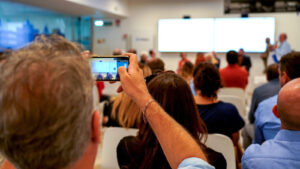
NAPLES - On 13 June at 18:00, at the Stazione Marittima in Naples, as part of DMED 2026 - Mediterranean Diet Exhibition, the popular science essay "Eat Italian. But Do It Well", published by Edizioni Palinsesto and produced in collaboration with the Technoscience Pontine Science and Technology Park, will be presented.
Edited by Michele Pistillo, Technoscience Account Manager and journalist, and Augusto Orsini, Technoscience Scientific Director, the volume offers a multidisciplinary reflection on the relationship between food, health, sustainability and the local area, addressing topics ranging from marketing to food counterfeiting, from medicine to nutrition, and from food districts to scientific research.
A Collective Essay on Food, Health and the Local Area
The book was created with the aim of promoting greater food awareness through contributions from professionals from different disciplines. These include Salvatore Venosi, National President of SIFCS and former member of Technoscience's Board of Directors, Angelo Barone, Pasquale Bonfilio, Lucrezia Cilenti, Salvatore De Cristoforo, Francesco Antonio Di Mauro, Vincenzo Dota, Michele Fini, Domenico Lampedecchia, Patrizia Lusi, Marco Meloni, Delio Palumbo and Matteo Antonio Russo.
Technoscience at DMED 2026: Research, Food Culture and Informed Choices
"Technoscience has always promoted dialogue between scientific research, innovation and society," says Augusto Orsini. "This volume makes a tangible contribution to disseminating a food culture based on knowledge, prevention and the value of the Mediterranean Diet."
"This is not a diet book, but a book about choices," Michele Pistillo emphasises. "The aim is to provide readers with useful tools to better understand the value of food, health and the decisions we make at the table every day."
The presentation of the volume is part of the DMED 2026 programme, one of Italy's leading events dedicated to the Mediterranean Diet, confirming Technoscience's commitment to promoting scientific communication initiatives capable of connecting research, the local area and people's well-being.
How we turn ideas into biotech projects
Would you like to understand how we could work together on complex biotech projects, such as the one on glioblastoma? Below is a selection of in-depth pages on biopharmaceutical pipelines, biobanks, data management and AI, telemedicine, precision cardiology and TRL pathways. They are the starting point for turning a good idea into an operational pathway, from the initial concept through to clinical validation and market entry.
Careers & Skills
Industry & Technology Transfer
GREEN & AGRI-BIOTECH
Biopharmaceuticals & Therapies
Biotechnology for Health
Frequently Asked Questions
Choose Technoscience!
To rapidly assess a project in biotech and translational medicine - from oncology and neuroscience to precision cardiology and telemedicine - we ask for: a clear clinical or industrial question, the available evidence (including negative findings), access to data and samples where applicable, a draft protocol (including ethical aspects), and hypotheses on biomarkers and endpoints. In return, we offer technical and scientific due diligence, the design of a credible TRL pathway and, where appropriate, support with regulatory strategy, validation and scalability.
Biotech FAQ
The questions you ask us most often
It is an approach that defines the the actual biology of the disease (tissues, markers and omics profiles where indicated) and links it to diagnostic and therapeutic decisions diagnostic and therapeutic personalised. It does not stop at generic classifications or guidelines applied wholesale: it builds a individual pathway measurable through robust clinical endpoints.
An enabling role. The biobanks ensure traceable and comparable samples; the omics broaden the understanding of the underlying mechanisms (inflammatory, metabolic and genetic). When integrated with rigorous protocols and real-world data, make reproducible the evidence and accelerate translation towards clinical trials or clinical adoption.