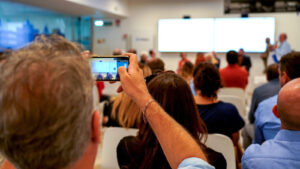
From 21 to 23 May 2026, the "G. Verdi" Municipal Theatre in San Severo hosted the third edition of the Alto Tavoliere Clinical Nutrition Days, an International Meeting dedicated to the role of clinical nutrition in prevention, the management of chronic diseases and improving patients' quality of life. The CME-accredited event brought together physicians, nutrition biologists, pharmacists, dietitians, psychologists, nurses, physiotherapists, healthcare technicians and kinesiologists, confirming the highly multidisciplinary nature of the congress.
It was within this context that the scientific lecture by the Prof. Matteo Antonio Russo, entitled "Molecular basis of the beneficial effects of Mediterranean diet on prevention of age-related cardiac diseases and on life expectancy". The official programme schedules the presentation for 12:15, with Chair: Augusto Orsini, confirming the link between biomedical research, nutrition, cardiovascular prevention and a translational approach to health.
Matteo Antonio Russo and the Clinical Value of the Mediterranean Diet
Mediterranean Diet, Cardiovascular Prevention and Longevity
The presentation drew attention to a central point: clinical nutrition cannot be reduced solely to controlling body weight or correcting individual dietary parameters. As also highlighted in the scientific rationale of the congress, nutrition plays a role in the primary prevention of non-communicable chronic diseases and their complications, involving obesity, type 2 diabetes mellitus, cardiovascular diseases, cancer, endocrine disorders, the gut microbiota, nutrigenomics and the safety of the agri-food supply chain.
From this perspective, the Mediterranean diet takes on a significance that goes beyond the strictly clinical sphere. It is not merely a dietary pattern, but a scientific, cultural and territorial heritage founded on food quality, origin, the relationship between production and health, and the ability to turn prevention into everyday practice. The congress also devoted considerable attention to the relationship between food, local areas, food safety, sustainability and local development.
Tags
Augusto Orsini introduces Prof. Russo's scientific lecture
Prof. Russo's lecture was introduced by the Prof. Augusto Orsini, listed among the speakers in the official programme as Scientific Director of the Technoscience Pontine Science and Technology Park. His presence strengthened the link between the Park's scientific activities and emerging themes in preventive medicine, clinical nutrition and health-related applied research.
For Technoscience, participation in an event of this level provides another opportunity for dialogue with the national and international scientific community. The Mediterranean diet, interpreted through the molecular basis of its beneficial effects, fits fully within a modern vision of health: one in which nutrition, biomedical research, prevention, innovation and the local area do not proceed separately, but become parts of a single scientific ecosystem.
Clinical Nutrition, Research and Health: An Integrated Vision
How we turn ideas into biotech projects
Would you like to understand how we could work together on complex biotech projects, such as the one on glioblastoma? Below is a selection of in-depth pages on biopharmaceutical pipelines, biobanks, data management and AI, telemedicine, precision cardiology and TRL pathways. They are the starting point for turning a good idea into an operational pathway, from the initial concept through to clinical validation and market entry.
Careers & Skills
Industry & Technology Transfer
GREEN & AGRI-BIOTECH
Biopharmaceuticals & Therapies
Biotechnology for Health
Frequently Asked Questions
Choose Technoscience!
To rapidly assess a project in biotech and translational medicine - from oncology and neuroscience to precision cardiology and telemedicine - we ask for: a clear clinical or industrial question, the available evidence (including negative findings), access to data and samples where applicable, a draft protocol (including ethical aspects), and hypotheses on biomarkers and endpoints. In return, we offer technical and scientific due diligence, the design of a credible TRL pathway and, where appropriate, support with regulatory strategy, validation and scalability.
Biotech FAQ
The questions you ask us most often
It is an approach that defines the the actual biology of the disease (tissues, markers and omics profiles where indicated) and links it to diagnostic and therapeutic decisions diagnostic and therapeutic personalised. It does not stop at generic classifications or guidelines applied wholesale: it builds a individual pathway measurable through robust clinical endpoints.
An enabling role. The biobanks ensure traceable and comparable samples; the omics broaden the understanding of the underlying mechanisms (inflammatory, metabolic and genetic). When integrated with rigorous protocols and real-world data, make reproducible the evidence and accelerate translation towards clinical trials or clinical adoption.