The Cochlear Implant Project Team at the Multi-Implant Centre of IRCCS Casa Sollievo della Sofferenza in San Giovanni Rotondo, Opera di San Pio da Pietrelcina, coordinated by Dr Lucio Vigliaroli, recently performed its first remote fitting, activation and mapping of a multichannel cochlear implant. The procedure involved a young patient from another Italian region with severe hearing loss who had received the implant in early March 2020 and was subsequently unable to travel from home because of the pandemic, creating clear practical difficulties in reaching the hospital for the subsequent technical and training procedures. The procedure was successfully completed as a telecooperation service, one of the possible applications of telemedicine. Telemedicine is a model of patient care that has expanded thanks both to advances in connectivity technologies, which have made it feasible and effective, and to the benefits it can provide to healthcare organisations and patients. Its main advantages include: a) enabling patients to access treatment without the cost and inconvenience of travel; b) allowing clinicians and therapists to provide services remotely across distributed facilities, thereby widening access to high-level treatment; and c) enabling clinics to obtain rapid external technical support. To provide increasingly rapid and effective care, particularly at a time when mobility was severely restricted by the COVID-19 emergency, the Implant Centre, in collaboration with MED-EL Italia, launched a remote fitting programme for patients with cochlear implants.
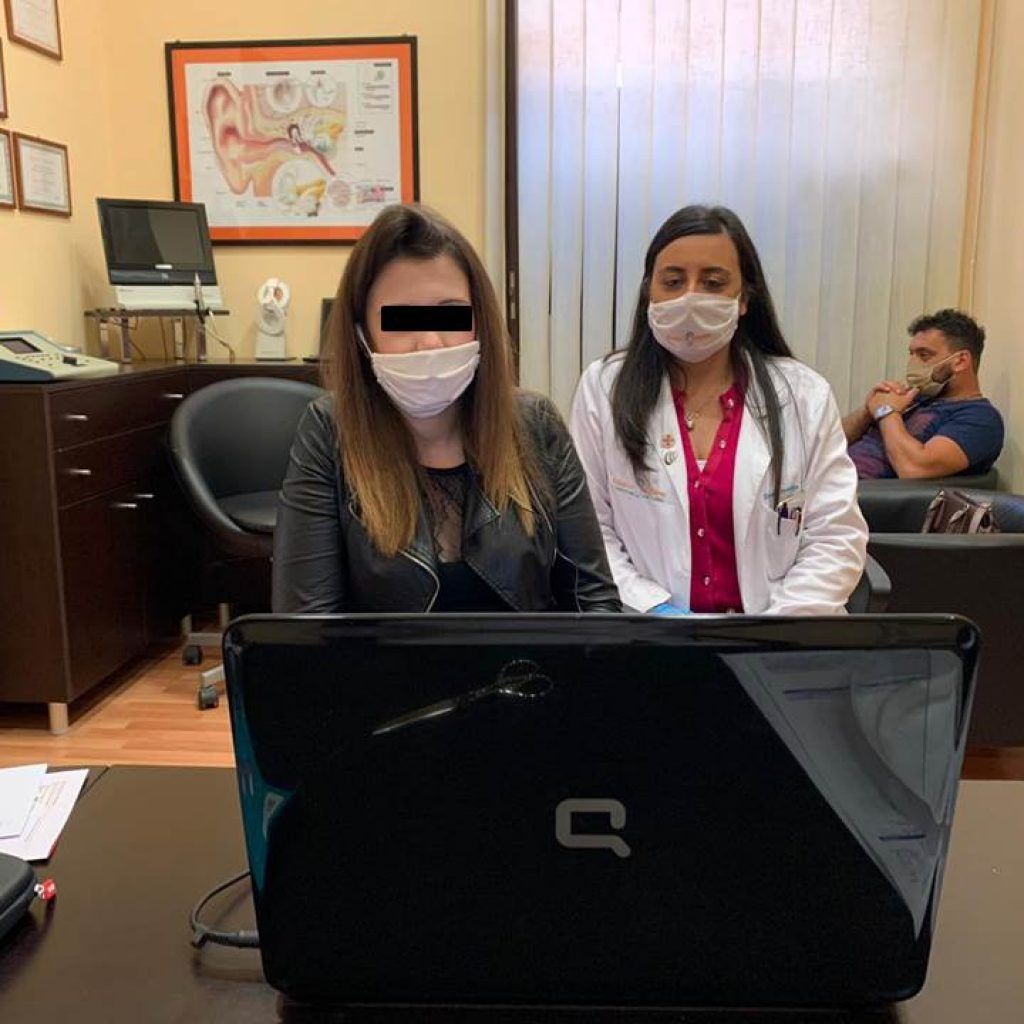
Remote Fitting is the process of activating, programming and adapting a technology to the individual patient by an expert operator working remotely, rather than being physically present with the patient. This is achieved through an internet connection between the centre’s computer and the computer at the patient’s workstation, with on-site assistance.
Through a hosted web-service platform, the remote expert can take control of the fitting software and see and hear the patient via a high-definition webcam and panoramic microphone, enabling activation and adjustment procedures that closely replicate standard in-person fitting. An on-site assistant is essential to perform basic technical steps, such as connecting the interface to the PC and connecting the processor, granting the expert access to the local computer, facilitating communication between the patient and the remote expert, and transmitting additional information such as audiometric test results or speech-therapy assessments. In this context, the audio-video connection is particularly important when used for delicate clinical procedures such as cochlear-implant fitting, because it must provide high levels of safety and reliability. Security is essential both to protect patient privacy and sensitive data and to prevent unauthorised external access to the connection. In this case, the service provided by the implant centre in collaboration with the manufacturer places maximum emphasis on patient safety: the entire Remote Fitting system, including the hosted web service and fitting software, underwent assessment by the relevant European and US certification bodies, including a complete risk analysis, and received CE marking for use in Europe and FDA approval with compliance with HIPAA requirements in the United States. The system is therefore certified to high current safety standards.
As regards reliability, the Remote Fitting system was adopted by the implantology centre, after the evaluation of the experience of use at the Malta Hospital, where the system was extensively tested and stabilized in order to avoid possible critical issues and problems that could compromise the performance of clinical activity". The performance provided by this system plays a very important role in this period of reduced mobility, allowing the technical operators to offer very high level support despite their physical absence. The path is now clear, also for the future, since Remote Fitting, in the logical perspective that the patient will have to be increasingly followed remotely and in the area, will allow timely interventions to support our centre, which, in the most complex cases, will be able to make use of immediate consultancy, without having to invite the patient to return when there is an available appointment. Finally, the validity of Remote Fitting as a teaching tool is underlined: towards the assistant on site, when it is not a simple collaborator, trained in a minimum of basic training and training. clinical management skills of the patient, but rather of a professional being trained in cochlear implant fitting, in this case Remote Fitting will be able to allow effective and gradual support in the process of cultural and professional growth of Digital Health and Telemedicine in this country.